
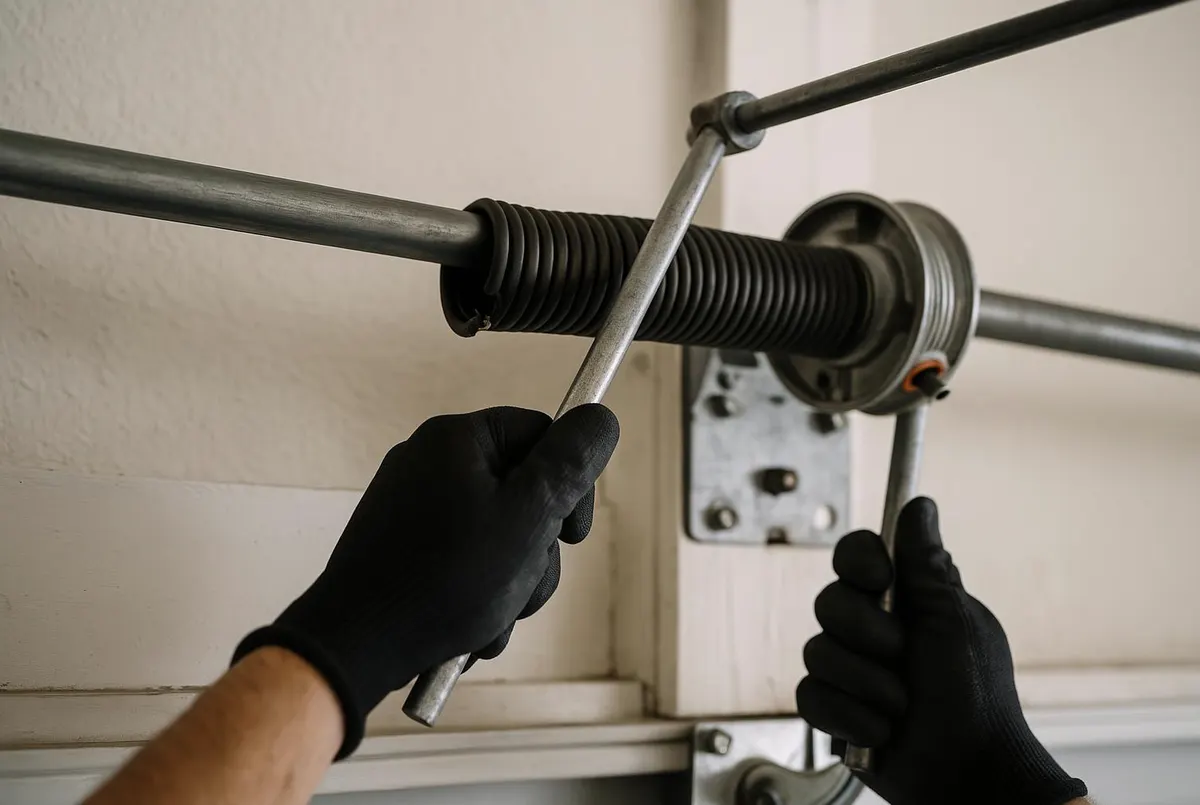
If your garage door feels heavier than usual, jerks instead of gliding, or makes a loud bang when it opens or closes, your springs are already telling you they're wearing out. Springs rarely fail without warning — they give off small, specific signals for weeks or months beforehand. Walk through the checklist below in your own garage to see where you stand.
First, Know Which Springs You Have
Most garages here use one of two setups. Torsion springs are mounted horizontally on a metal shaft directly above the closed door, usually one or two thick coiled springs. Extension springs run along the horizontal tracks on either side of the door, stretching and contracting as the door moves. The wear signs below apply to both, but a few items are specific to one type — those are marked.
The Checklist
1. Visible gaps between coils
Look closely at the spring itself. A healthy torsion spring has coils sitting snugly against each other with no daylight between them when the door is closed. If you see uneven gaps, or the coils look stretched out of shape, the spring has lost tension and is nearing the end of its life.
2. Rust or flaking on the coils
Salt air off the water speeds up corrosion on any exposed metal, and springs are no exception. Surface rust weakens the steel from the outside in, making the spring more likely to snap under normal strain rather than wear down gradually. If you can see orange flaking or pitting, treat it as a warning sign even if the spring still looks intact otherwise.
3. The door feels heavier when lifted by hand
Disconnect the opener (pull the emergency release cord) and lift the door manually about halfway. It should stay roughly in place and move with light, even effort. If it feels noticeably heavier than it used to, or it drops on its own once you let go, the springs aren't carrying their share of the door's weight anymore.
4. The door is crooked or sags on one side
Stand back and look at the door as it closes. If one side dips lower than the other, or the door looks tilted in the opening, one spring (or one cable on an extension-spring setup) is likely weaker than its match. Springs are sold and installed in matched pairs for a reason — uneven wear puts extra strain on the stronger side, too.
5. Loud bangs, popping, or grinding during operation
A sudden loud bang from the garage, especially one that happens when no one is using the door, is one of the more unmistakable signs a spring has already given out or is about to. Grinding or popping sounds during normal opening and closing point to metal fatigue inside the coils themselves.
6. The opener struggles or reverses unexpectedly
Garage door openers are built to move the door, not lift its full weight — that job belongs to the springs. If your opener strains, stalls partway, or the door reverses on its own before reaching the floor, the opener is likely compensating for springs that can no longer do their job.
7. Slack or fraying in the cables (extension spring systems)
On extension-spring doors, check the lift cables running alongside the springs. Loose, fraying, or visibly stretched cable is often paired with a weakening spring, since the two work together under tension. A frayed cable under strain is also a safety hazard on its own.
8. Swelling or warping in the door panels
This one isn't about the spring directly, but it changes how hard the spring has to work. Florida humidity and afternoon downpours can cause wood or composite panels to swell slightly, adding weight and friction. A spring that was properly balanced for a dry door may now be working harder than it was designed to, accelerating wear.
When to Call Anna Maria Door & Opener
If you've checked two or more items on this list, don't wait for the spring to let go on its own — a fully loaded torsion spring under tension can cause real injury or damage when it snaps. Anna Maria Door & Opener handles Garage Door Spring Repair for both torsion and extension setups, including matched-pair replacement so one side doesn't outwork the other. If sagging or cable wear has already thrown the door out of alignment, our Cable & Roller Replacement service addresses that at the same time, so you're not paying for a second visit a few months later.
If any of this sounds familiar, give Anna Maria Door & Opener a call before hurricane season storms put extra strain on a door that's already working too hard. We serve Anna Maria, Holmes Beach, Bradenton Beach, and the surrounding coastal communities, and we can usually get a technician out quickly to check your springs before they fail on their own schedule instead of yours.